


The International Executive MBA is designed to solve the most critical challenges faced by leaders like you in a globalised and constantly changing business env
 Blog
Blog
07 de November de 2023
Data-driven Business Decision Making
Sumario:
What is data and what is its role?
Data is everything, and it is essential for strategic decision making in companies. Its use "is not a passing fad, it is here to stay and will continue in the future. This is not the dotcom bubble of the 1990s. So says Ramón Alberto Carrasco, an expert in intelligent information systems, professor in the Department of Marketing and Market Research at the Complutense University of Madrid and of the Master's Degree in Data Science for Business at ENAE Business School.
Precisely the statement was made during a webinar organized by this business school on 'Data Driven Companies'. "Data is the digital transformation in which we are immersed".
Professor Carrasco argues that covid has accelerated digital transformations in companies and that this transformation is a revolution like the space race in the 1970s in the United States.
The use of information helps to accelerate sales processes, customer service, human resources management and financial forecasting. Of course, all this follows the strategic decision to adopt an 'intelligent' model as a "compass" for companies to follow.
Decision-making process
Although decision-making is a key element in the business environment, these are usually quick, precise and in an environment surrounded by uncertainty, so it is a complex process that entails responsibilities and risks that must be assumed. Thus, it is essential to have technology and systems on which to rely to ensure the success of the decisions taken.
Following the diagram drawn up in 1998 by Harvard Business School professor Robert N. Anthony, Ramón Carrasco represents it as a pyramid: at the top, strategic planning; below, management control, operational control and finally, at the base, the operational relationship.
On its own, the decision to implement data-driven management systems is not enough to achieve success, because data and the environment change, so the strategy must be tested on an ongoing basis. And even change course if necessary.
In his virtual conference, the professor stressed that companies do not have to change their philosophies, but the ways of doing business in a market-, customer- and competitor-oriented manner. Customer satisfaction must be sought, "but satisfaction that is profitable for the company".
He recognizes that this vision is not new, but "common sense", and the use of large volumes of information can make a decisive contribution to it.
Ramón Carrasco recalled how companies undertake the most complex transformations in times of crisis, precisely when economic results are declining. He believes that this transformation is a mistake if it focuses only on technology and does not focus on the customer, which in his opinion is the best way to add value to the organization.
He believes that customer relationship management has become a fundamental strategy for both large and small organizations that want to be market-oriented.
Thus, among the top business priorities is also the orientation to data-driven decision making, so companies are adapting at forced rates to materialize concepts such as big data, data science and business intelligence.
Carrasco noted that these tools are changing the organizational culture making it more effective and efficient, creating behaviors for superior value creation for buyers and, therefore, superior performance for the business.
Market Analysis
This market orientation would involve seeking customer satisfaction through competitive and viable offerings; a competitive orientation involving competitive diagnostic actions and analysis of the current and potential market; and cross-functional coordination, which involves the joint and widespread use of the organization's resources for the provision of superior value to target customers.
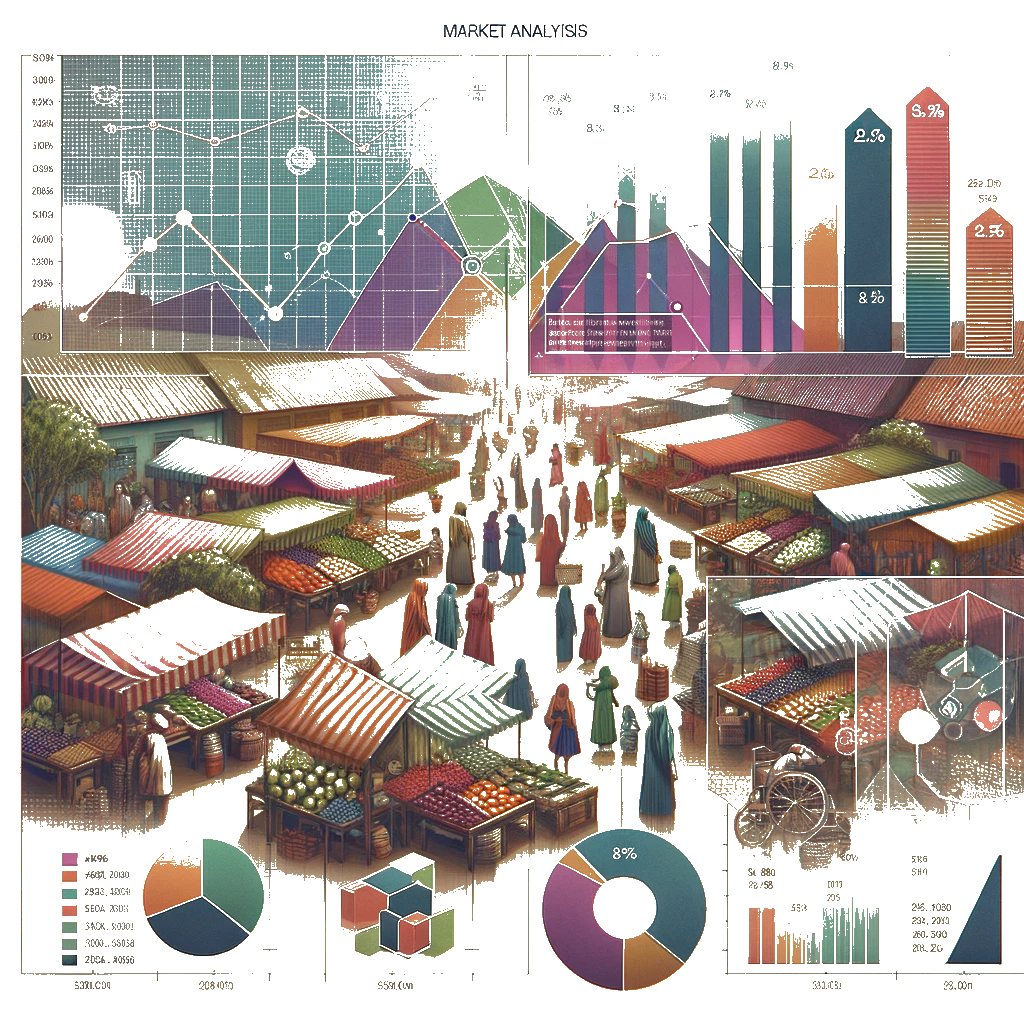
Thus, market orientation would be composed of three dimensions:
- Intelligence generation: obtaining a system of information on the present and future needs of customers, as well as those of distributors, suppliers, pressure groups, competitors and the macro-environment in general.
- Dissemination of information: it must be spread throughout all areas of the company so that they work together towards the same objective.
- Response to the information: take advantage of this knowledge obtained and disseminated to turn it into actions that will lead to competitive advantages.
Professor Carrasco maintains that the new business philosophy goes beyond the use of certain tools or technologies, as Business Intelligence comes into play, which is nothing more than converting data into knowledge and this knowledge into actions to create the competitive advantage of the business.
It is surprising to see the milestones that have been reached in recent years thanks to the creation of new algorithms that are constantly being trained with new data, and predicts that soon machines will begin to understand human language and that artificial intelligence will dominate the way of doing business.
As we started this post, the speed in obtaining data, its variety and veracity are key to the value they provide, so they are "everything" for predicting the progress of the business, managing the company's brand, carrying out campaigns and even knowing how many customers will leave the company, when and why.
What the professor now demands is qualified personnel to interpret the infinite amount of data that is obtained; and in this sense he was convinced that information analysts will soon be one of the most in-demand professions.
Masters relacionados


Agri-food is a strategic sector for both the national and international economies.



A company or organization that anticipates, identifies needs and threats, foresees, and makes strategic and operational decisions based on Comprehensive Risk Management



In ENAE Business School's Official Master in Logistics and Operations Management program, you will learn how to analyse the performance of a company's operation


The Master in International Trade, E-commerce and AI Concentration is designed to prepare professionals to lead international business operations in a global, d
Artículos recomendados
También te podría interesar leer

Employability in logistics depends on a professional's ability to combine technical knowledge, digital skills and strategic thinking in response to the changing needs of logistics and supply chain operations. As companies face increasingly complex…

An international trade center supports companies and professionals involved in cross-border business. Depending on the country and institution, its activities may include export promotion, market intelligence, regulatory guidance, logistics support…

There is a ceiling most professionals hit somewhere in their thirties. The technical skills that earned them their first promotion stop being enough, and the gap between where they are and where they want to be starts to feel less like a ladder and…
