


The International Executive MBA is designed to solve the most critical challenges faced by leaders like you in a globalised and constantly changing business env
 Blog
Blog
13 de November de 2024
Kanban Methodology and How It Can Improve Your Team's Efficiency
Sumario:
The Kanban Methodology is a visual agile management tool designed to optimise workflow and facilitate continuous improvement in projects and tasks. Today, it is one of the most widely used agile methodologies in sectors such as HR, Digital Marketing and Project Management as its use can improve task flow if used correctly.
Kanban Method Principles: Improving Flow Management
The Kanban methodology is based on basic principles of visualisation and task limitation. Here are some of its pillars:
- Visualising the workflow: The implementation of a Kanban board allows to observe in real time the stages of the process and the status of pending tasks. This provides a clear view of all activities and helps teams to identify bottlenecks and opportunities for improvement.
- Limiting WIP (Work In Progress): The Kanban system helps to set limits on the number of tasks in progress to avoid overload and improve quality. Limiting WIP allows teams to manage the flow of work in an optimal way, maintaining a constant flow and avoiding waste and cumulative flow.
- Evolutionary change management: Kanban encourages incremental and evolutionary change, allowing to adapt the work process without implementing drastic changes. This approach results in better adaptation to the needs and expectations of customers and other stakeholders.
How does the Kanban Method work?
The Kanban method is based on a visual board with columns representing the different stages of the workflow, such as ‘To Do’, ‘In Progress’ and ‘Done’. Within each column, Kanban cards describing specific tasks are placed. This visual board facilitates collaboration and improves efficiency by providing a clear overview of the process.
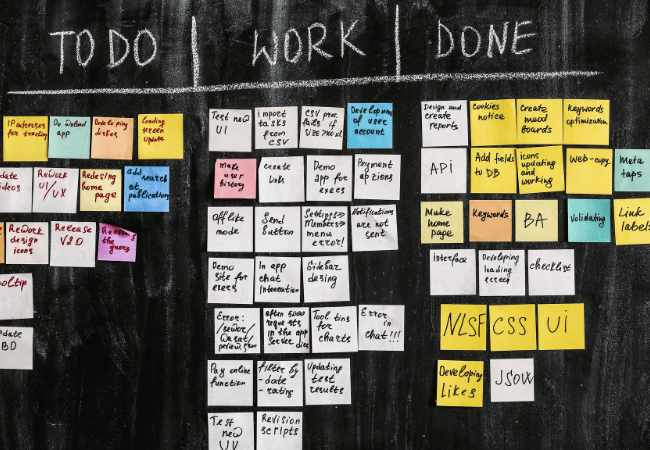
- Create a Kanban board: You can implement a digital Kanban board in tools as we will see later in the article.
- Board column: Each column of the board represents a stage in the workflow, and the cards move from one column to another until the process is completed.
- Visual cards: Kanban cards contain relevant information for each task and allow team members to manage their activities in an organised and clear way.
Advantages of Implementing the Kanban Methodology in Agile Teams
The Kanban Methodology has become essential for teams looking to optimise their productivity and improve workflow especially in companies with the ability to form agile teams. The Kanban methodology is based on a visual method that encourages improving efficiency, managing and improving the workflow of a department. Below are some of its main advantages:
- Flexibility and adaptability: Unlike the Scrum methodology, Kanban is flexible and allows adding tasks at any time without compromising the flow and being able to set the optimal cycle time.
- Improved customer satisfaction: By providing continuous delivery of results, Kanban helps teams meet customer expectations more effectively.
- High quality: Limiting WIP helps teams focus on fewer tasks, promoting higher quality and reducing errors.
Steps to Implement Kanban Methodology in your Company
- Define the workflow: Identify and segment the current work process into clear workflow steps.
- Set up the Kanban board: Create a board with columns representing each stage and assign visual cards to tasks.
- Limit the amount of work in progress: Set limits on each column to improve quality and avoid overload.
Periodically review the network: Hold regular meetings to continually adjust and improve the workflow.

Improving task efficiency through this methodology reduces work overload in some departments of the company.
Practical Applications of the Kanban Methodology in Different Areas
The Kanban methodology can be applied in multiple sectors to optimise processes and promote continuous improvement. These are some of its outstanding applications:
Kanban in Digital Marketing
Campaign planning, content creation and metrics analysis must be continuously coordinated, the Kanban method offers a visual tool that facilitates the tracking and prioritisation of tasks.
A Kanban board allows the team to visualise the status of each campaign, from the planning phase through to publication and analysis of results. Tasks can be divided into columns such as Pending, In Progress, In Review and Completed.
Each card on the dashboard represents an activity, such as creating an article, scheduling a social media post or producing a metrics report. Quick, collaborative reviews can also be implemented for visual content, copywriting and graphic design. This allows the creative team to receive immediate feedback and make adjustments before the project is finalised.

Kanban in Human Resources
This methodology helps to visualise the stages of recruitment and the management of employee applications and is now considered an essential methodology in this department to meet the current challenges in this sector.
It allows to divide the recruitment process in different phases such as CV Review, Initial Interviews, Final Interviews and Offer. Each candidate has their own card, which gives visibility of the progress of each recruitment process.
This not only helps recruiters to see what stage each candidate is at, but also allows them to identify bottlenecks in the process and take steps to streamline them.
Kanban in Logistics
The Kanban system is widely used in logistics for inventory control. Using physical or digital Kanban cards, stock can be monitored in real time, ensuring that inventory levels are kept optimal and avoiding both excess and shortage of products.
This methodology also serves to optimise the supply chain as it allows a constant flow in supply chain management, where each stage of the process (from purchase order to receipt and distribution of products) is visually organised. This improves coordination between teams and makes it possible to anticipate problems.
Kanban tools
For teams that want to adopt this agile methodology, there are multiple digital Kanban tools that offer digital dashboards and have the practical application you need with the rest of the team. These are the most widely used Kanban tools in companies today:
- Jira: Used in software development environments and agile teams, it stands out for the functionalities it has for tracking issues.
- Trello: It is one of the most popular as it is very easy to use and has a free version with many features.
- Zoho Projects: A project management tool that allows you to create customised Kanban boards and manage tasks easily.
- Kanban Tool: A simple and effective platform to visualise and organise workflow.
Conclusion: Why Choose Kanban Methodology?
The Kanban methodology is an effective solution for teams that want to improve efficiency and optimise workflow. By fostering a visual, adaptive and continuous improvement-oriented approach, Kanban enables agile and efficient task management. If you are looking for a methodology that allows your team to adapt to evolutionary change and continuously improve, Kanban is the answer!
Masters relacionados


Agri-food is a strategic sector for both the national and international economies.



A company or organization that anticipates, identifies needs and threats, foresees, and makes strategic and operational decisions based on Comprehensive Risk Management



In ENAE Business School's Official Master in Logistics and Operations Management program, you will learn how to analyse the performance of a company's operation


The Master in International Trade, E-commerce and AI Concentration is designed to prepare professionals to lead international business operations in a global, d
Artículos recomendados
Área
También te podría interesar leer

An international trade center supports companies and professionals involved in cross-border business. Depending on the country and institution, its activities may include export promotion, market intelligence, regulatory guidance, logistics support…

There is a ceiling most professionals hit somewhere in their thirties. The technical skills that earned them their first promotion stop being enough, and the gap between where they are and where they want to be starts to feel less like a ladder and…

The volume of data any organisation handles today, the speed at which new threats emerge and growing regulatory complexity have outpaced traditional manual approaches. That is precisely where AI-driven risk management stops being a technology…
