

 Blog
Blog
Supply chains fractured, trade wars escalated, a pandemic rewired sourcing decisions overnight and yet global trade volumes kept climbing. If that sounds contradictory, it is because most conversations about international trade are still using a map drawn twenty years ago. The terrain has shifted and the professionals who understand exactly how are the ones shaping the new system, not just adapting to it.
This is not a moment for generic overviews, it is a moment to ask sharper questions: What is international trade, really? Which forces driving it are structural and which are temporary? And what does all of this mean if you are building or pivoting into, a career in global commerce?
International Trade: Definition, scope and why the classic framing falls short
International trade is defined as the exchange of goods, services and capital between two or more countries, enabling nations to specialise according to their competitive advantages and access products they do not produce domestically. For this reason, this specialisation improves the overall efficiency of the global economic system by allowing resources to flow toward their most productive uses.
That definition is accurate. It is also incomplete without context. The version of international trade taught in most economics textbooks (countries exporting surplus production, importing what they lack, balancing through price signals) describes a system that was largely stable between 1995 and 2015. What has emerged since is something more volatile, more politically contested and more technically complex.
One distinction worth keeping clear:
- Foreign trade refers to the commercial transactions of a specific country with the rest of the world, viewed from the inside out.
- International trade describes the totality of commercial relationships between nations: a systemic, multilateral perspective.
Both terms appear interchangeably in everyday conversation, but the difference becomes significant when analysing trade policy or economic strategy at a macro level.
Today, international trade encompasses physical goods crossing borders, financial services delivered remotely, digital products transmitted instantly, intellectual property licensed globally, and cross-border e-commerce reaching consumers without a single brick-and-mortar presence abroad. Each of these categories operates under different rules, faces different risks and requires different professional competencies.
From rules-based order to managed fragmentation: How the system has shifted
The architecture of modern international trade was built after World War II. The General Agreement on Tariffs and Trade (GATT), established in 1947, created the first rules-based framework for reducing tariffs and resolving commercial disputes. Its successor, the WTO, launched in 1995 with a broader mandate and a formal dispute settlement mechanism that gave the system real teeth.
Through the 1990s and 2000s, the model functioned largely as designed. Manufacturing migrated to lower-cost economies. Global value chains multiplied. China's accession to the WTO in 2001 accelerated integration on a massive scale, reshaping trade flows across virtually every sector. For roughly two decades, the prevailing assumption was that deeper economic interdependence was both inevitable and broadly beneficial.
That consensus began breaking down around 2016. The causes were cumulative: rising inequality within countries, political backlash against offshoring, the US-China trade dispute, Brexit, and then the supply chain collapses triggered by COVID-19. The pandemic was particularly revealing — it exposed the fragility of highly optimised, single-source supply chains and forced a rapid reassessment of where to produce, from whom to source, and how much buffer stock to hold.
The current phase is best described as managed fragmentation. Trade is not retreating — the WTO's most recent data shows global merchandise trade volumes are still growing — but it is reorganising around new fault lines. Geopolitical alignment, supply chain resilience, and sustainability credentials are now as important as cost and speed in sourcing decisions. Nearshoring (relocating production closer to the end market) and friendshoring (sourcing from politically aligned countries) have moved from strategic concepts to operational realities for many multinationals.
The three pillars of international trade and the fourth that changes everything
Trade in goods
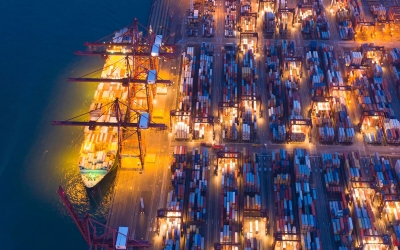
Merchandise trade remains the most visible and largest-volume category. It covers raw materials, agricultural products, manufactured goods, and energy. Physical goods must clear customs, comply with technical standards and sanitary regulations, and absorb logistics costs — all of which create friction that services and digital products largely avoid. Automotive, electronics, pharmaceuticals, and chemicals rank among the most traded goods sectors globally. Despite predictions of its relative decline, goods trade remains the backbone of global commerce by volume.
Trade in services
Services trade has expanded faster than goods trade over the past two decades and is an increasingly defining feature of advanced economies. It includes financial services, management consulting, education, tourism, information technology, and the entire ecosystem of digital platforms. Services often cross borders invisibly: a law firm in Madrid advising a company in Singapore, a software developer in Eastern Europe supporting a startup in California, a streaming platform distributing content across forty markets simultaneously. According to the WTO, commercial services now account for roughly a quarter of total world trade value, a share that continues to rise.
Capital flows and foreign direct investment
Foreign direct investment (FDI) and cross-border capital movements are the third pillar. When a company builds a manufacturing plant abroad, acquires a foreign firm, or establishes a regional headquarters in a new market, it is participating in international trade in its deepest form. FDI enables technology transfer, creates employment in host economies, and generates productivity gains that extend well beyond the investing company. For trade policymakers, attracting and managing FDI is a central strategic concern — and increasingly, screening inbound investment for security implications has become equally important.
Digital trade and cross-border e-commerce
This fourth category does not map cleanly onto traditional classifications, which is part of what makes it so disruptive. Cross-border e-commerce allows a small manufacturer in Valencia or a designer in Milan to sell directly to consumers in Japan, Brazil, or South Korea without a local subsidiary, a distribution agreement, or years of market preparation. Platforms such as Amazon Global, Alibaba International, and Etsy have democratised market access at scale. The tradeoffs are real — logistics complexity, platform dependency, exposure to local consumer protection regulations — but the entry barriers have fallen dramatically. Digital trade also raises unresolved questions around data flows, digital taxation, and the jurisdictional authority to regulate cross-border transactions that regulators are still working through.
The architecture of trade agreements: What professionals actually need to nnow
Trade agreements define the conditions under which goods and services cross borders. Their scope has expanded well beyond tariff schedules to cover investment rules, intellectual property protection, labour standards, environmental commitments, and digital trade provisions. For professionals working in global markets, knowing which agreements apply to your sector is a core technical competency, not background reading.
| Agreement | Parties | Key Features | Status |
|---|---|---|---|
| USMCA / T-MEC | USA, Mexico, Canada | Digital trade, IP, labour and environmental standards | In force |
| CPTPP | 11 Asia-Pacific nations | Tariff elimination, services liberalisation, investment protection | In force; expanding |
| EU–Japan EPA | EU, Japan | Covers ~30% of world GDP; eliminates most tariffs | In force |
| EU–Mercosur | EU, Argentina, Brazil, Paraguay, Uruguay | 770+ million consumers; sustainability chapter | Pending ratification |
| AfCFTA | 54 African Union members | Pan-African free trade zone; intra-African trade boost | Implementation phase |
| RCEP | 15 Asia-Pacific nations | World's largest bloc by GDP; goods, services, e-commerce | In force |
A pattern worth noting: the most recent generation of agreements is as concerned with behind-the-border measures as with tariffs. Regulatory alignment, mutual recognition of standards, data governance, and sustainability chapters reflect the reality that modern trade is as much about rules as about rates.
Internationalisation strategies: Matching the approach to the market
Companies do not enter international markets in a single way. The right approach depends on the product, the target market's regulatory environment, the company's risk appetite, and its available resources. Understanding these options in depth is one of the most practical skills a trade professional can bring to an organisation.
| Strategy | Best Suited For | Main Advantage | Key Risk |
|---|---|---|---|
| Direct Export | Companies with established products | Higher margins, direct market control | Higher upfront investment |
| Distribution Agreements | SMEs entering new markets | Lower cost, local partner knowledge | Dependence on third party |
| Joint Ventures | Regulated or complex markets | Shared risk, local legitimacy | Governance and control challenges |
| Foreign Subsidiary | Large companies with long-term commitment | Full control, brand presence | High fixed costs |
| Cross-Border E-Commerce | SMEs and digital-native businesses | Low entry barriers, scalable | Logistics complexity, platform dependency |
Alongside strategy selection, three operational areas determine whether an internationalisation effort succeeds or stalls:
- Export finance and insurance instruments (letters of credit, documentary collections, export credit guarantees) reduce financial exposure in markets where payment risk is high.
- Customs and logistics management, including working command of Incoterms and the ability to navigate different tariff regimes, directly affects cost competitiveness.
- Market research, drawing on sources such as UN Comtrade, ITC Trade Map, and Eurostat, is what turns market selection from intuition into evidence-based decision-making.
Three key trends restructuring global commerce
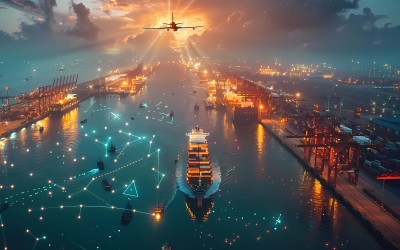
Supply chain diversification is the most operationally urgent. Companies and governments are actively reducing single-country dependencies and building redundancy into their sourcing strategies. Southeast Asia, Mexico, and Eastern Europe are all benefiting from this rebalancing, while sectors such as semiconductors, critical minerals and pharmaceuticals are at the centre of strategic relocation efforts driven as much by security considerations as by cost.
Sustainability regulation as trade policy is the shift with the longest tail. The EU's Carbon Border Adjustment Mechanism (CBAM), which effectively prices carbon-intensive imports from countries with weaker climate standards, is only the most visible example. Exporters to EU markets now need to understand their products' carbon footprint across the full value chain — not as an ESG aspiration, but as a compliance requirement. Circular economy principles — designing products for longevity, reuse, and recyclability — are increasingly rewarded in demanding international markets and increasingly required by regulation.
Artificial intelligence and trade technology are transforming the operational layer of international commerce. AI-powered tools are being applied to customs classification, demand forecasting, trade finance risk assessment, and logistics optimisation. Proficiency with these tools is no longer confined to technology specialists; it is becoming a baseline expectation for professionals across the trade function.
Careers in international trade: Roles with real demand
International trade generates a wide and growing range of professional roles. The common thread is a combination of technical knowledge (trade regulations, customs systems, finance instruments, logistics) with cross-cultural communication and strategic judgment.
- Export Area Managers lead commercial expansion into foreign markets, managing distributor networks and key accounts across regions.
- International Trade Analysts provide the market intelligence and regulatory mapping that underpin strategic decisions.
- Supply Chain and Logistics Managers ensure that global operations run efficiently and compliantly in an environment where disruption has become routine.
- Trade Finance Specialists at banks and export credit agencies structure the financial instruments that make cross-border transactions viable.
- Trade Compliance Officers navigate the increasingly complex web of export controls, sanctions regimes, customs requirements, and technical standards that companies must meet across multiple jurisdictions simultaneously.
Beyond the private sector, international organisations, trade promotion bodies and diplomatic services employ professionals with expertise in trade policy, negotiation, and development economics. These roles attract professionals who want to shape the rules of global commerce rather than simply apply them.
Master in International Trade at ENAE Business School
If you are committed to building genuine expertise in this field, the Master in International Trade at ENAE Business School is structured precisely around the realities described throughout this article. The programme covers the full operational and strategic spectrum: trade agreements and customs management, export finance, international logistics, cross-border e-commerce, sustainability in global supply chains, and market entry strategy.
The faculty is composed of professionals who are active in the field — not academics working from dated case studies, but practitioners from multinational companies, trade finance institutions, and export promotion agencies. ENAE's network of alliances with chambers of commerce and international organisations gives students direct access to professional environments during the programme, accelerating the transition into roles with real international scope.
Frequently asked questions about international trade
What is the difference between international trade and foreign trade?
Foreign trade refers to the commercial transactions of a specific country with the rest of the world — it is an inward-facing concept focused on one nation's imports and exports. International trade describes the totality of commercial relationships between nations at a global level, offering a systemic perspective. A government manages its foreign trade policy; international trade is the aggregate of all countries' commercial interactions simultaneously.
Why is international trade important for a country's economy?
International trade enables countries to access goods and services they cannot produce domestically, specialise in sectors where they hold a comparative advantage, attract foreign investment, and generate employment in export-oriented industries. According to the WTO, economies with higher trade openness tend to show stronger long-term growth, though distributional effects — who benefits and who bears the adjustment costs — require active policy attention to manage fairly.
What are the main barriers to international trade?
Barriers fall into two broad categories: tariff barriers (import duties and export taxes) and non-tariff barriers (technical standards, sanitary regulations, customs procedures, local content requirements, and digital trade restrictions). Geopolitical fragmentation has added a third layer: export controls, investment screening mechanisms, and sanctions regimes that affect specific sectors, technologies, and bilateral relationships in ways that traditional trade law was not designed to handle.
What skills are most valued in international trade careers?
Technical skills include knowledge of customs and tariff systems, trade finance instruments, Incoterms, international logistics, and the provisions of relevant trade agreements. Equally valued are cross-cultural communication, negotiation, analytical thinking, and command of at least two working languages. Digital fluency — including familiarity with trade management platforms, data analysis tools, and e-commerce infrastructure — has moved from a differentiator to a baseline expectation for professionals entering the field.
How does the WTO regulate international trade?
The WTO provides the legal and institutional framework for international trade among its 164 member countries. It administers multilateral trade agreements, serves as the primary forum for trade negotiations, and operates a dispute settlement mechanism through which governments can challenge measures they consider incompatible with agreed rules. Its foundational principles — non-discrimination, transparency, and predictability — underpin the multilateral trading system, even as their practical application has become increasingly contested in recent years.
Is international trade a good career choice?
Yes, and the reasoning is structural rather than cyclical. Growing supply chain complexity, the expansion of trade agreements into new regulatory areas, tightening compliance requirements, and the integration of digital tools across all trade functions are all increasing demand for qualified professionals. Roles in export management, trade compliance, international logistics, and trade finance show consistently strong demand across sectors. The international dimension of the work also provides significant career mobility — a competency set built in this field translates across geographies and industries in ways that many specialisations do not.
What is the impact of sustainability regulation on international trade?
Sustainability regulation is becoming a direct trade issue, not a separate ESG concern. The EU's Carbon Border Adjustment Mechanism (CBAM) is the most consequential current example: it prices carbon-intensive imports from countries with weaker climate policies, effectively requiring exporters to the EU to understand and disclose their products' carbon footprint across the full value chain. Similar logic is driving supply chain due diligence laws, deforestation regulations, and mandatory sustainability reporting requirements across major markets. Professionals who can navigate this regulatory layer have a significant advantage in markets where these frameworks are tightening.