



The International Executive MBA is designed to solve the most critical challenges faced by leaders like you in a globalised and constantly changing business env
 Blog
Blog
14 de September de 2026
What Is an International Trade Center? Functions, skills and career opportunities
Sumario:
An international trade center supports companies and professionals involved in cross-border business. Depending on the country and institution, its activities may include export promotion, market intelligence, regulatory guidance, logistics support, business development and professional training.
One of the main international organizations in this field is the International Trade Centre (ITC), a joint agency of the World Trade Organization and the United Nations that works to strengthen the international competitiveness of businesses, particularly small and medium-sized enterprises.
However, international trade is supported by a much broader ecosystem. Export promotion agencies, chambers of commerce, specialized consultancies, financial institutions and logistics operators all contribute to helping companies access and operate in international markets.
Understanding how this ecosystem works is particularly relevant for professionals considering a career in international business, logistics, export management or international consulting.
What does an International Trade Center do?
International trade support has changed significantly over the past two decades. Activities that were once focused mainly on export documentation and administrative procedures now extend to areas such as market intelligence, regulatory compliance, digital trade, logistics, sustainability and international business strategy. Several developments explain this evolution:
Digitalization has made it easier for companies to identify customers and suppliers in other countries. Digital platforms and international marketplaces have reduced some barriers to market access, but they have not eliminated the complexity of customs procedures, taxation, contracts, logistics or regulatory compliance.
At the same time, geopolitical tensions and supply-chain disruptions have encouraged companies to reconsider where they source, manufacture and distribute their products. Concepts such as nearshoring, diversification of suppliers and supply-chain resilience have therefore become increasingly relevant to international business decisions.
Sustainability requirements are also becoming part of international trade management. Regulations such as the European Union's Carbon Border Adjustment Mechanism (CBAM) illustrate how environmental criteria can affect reporting, compliance and market access.
For companies operating internationally, navigating these factors requires professionals who can combine commercial understanding with technical knowledge of international operations.
The international trade ecosystem: Where professionals work
International trade professionals do not work in a single type of organization. Their expertise is required across a wide range of institutions and companies.
Public export promotion agencies
Public export promotion agencies help domestic companies expand into international markets. Their services may include market information, internationalization programs, support at trade fairs and guidance on export procedures.
In Spain, ICEX España Exportación e Inversiones is one of the main organizations supporting the internationalization of Spanish companies.
These institutions can also work closely with regional development agencies, chambers of commerce and other organizations involved in business internationalization.
Chambers of commerce
Chambers of commerce provide services to companies operating or seeking to operate internationally. These may include training, market information, trade missions, documentation and advice on internationalization.
At an international level, the International Chamber of Commerce (ICC) plays an important role in developing standards and rules used in global business, including Incoterms, which establish responsibilities between buyers and sellers in international transactions.
Business schools and specialized academic institutions
Business schools prepare professionals to understand both the strategic and operational dimensions of international business, from identifying markets and negotiating with international partners to managing finance, logistics and customs procedures.
At ENAE Business School, international trade training combines academic knowledge with the analysis of business situations and practical aspects of international operations. The objective is to help students understand not only how international trade works, but how decisions in areas such as logistics, finance, marketing or regulation affect business performance.
Trade and internationalization consultancies
Consulting firms support businesses entering new markets or managing international operations. Their work can include market selection, export planning, regulatory compliance, customs procedures, international contracts and the search for distributors or commercial partners.
For professionals in this field, the ability to combine analytical skills with knowledge of specific markets is particularly important.
Free trade zones and logistics hubs
Free trade zones, ports and international logistics hubs concentrate significant volumes of import, export and distribution activity.
Working in these environments requires knowledge of logistics, customs, taxation, compliance and supply-chain management. They therefore offer career opportunities for professionals with specialized international trade expertise.
Key areas of international trade
International trade involves much more than managing export documentation. Professionals working in this field need to understand several interconnected areas.
International market research
Internationalization decisions should be based on reliable information. Tools such as Trade Map, developed by the International Trade Centre, allow professionals to analyze trade flows, identify competitors, compare markets and assess the potential demand for different products.
Market research can help companies decide where to expand, which countries to prioritize and which risks need to be considered before entering a new market.
Customs and regulatory compliance
Customs procedures are a fundamental part of international trade. Professionals working in import and export operations need to understand tariff classification, customs documentation, rules of origin and the application of trade agreements.
They may also work with documents such as certificates of origin, packing lists, bills of lading, commercial invoices and customs declarations.
Errors in this area can lead to additional costs, delays or compliance problems, which makes specialist knowledge particularly valuable.
International finance
Selling internationally also creates financial risks that do not normally arise in domestic transactions. Companies may use instruments such as letters of credit, export credit insurance, international factoring or other forms of trade finance to manage payment and country risk.
Understanding these mechanisms helps professionals evaluate how an international operation should be structured and financed.
International negotiation
International business also requires the ability to work with people from different commercial and cultural environments. Communication styles, decision-making processes, negotiation practices and attitudes towards hierarchy or deadlines can vary considerably between markets.
Intercultural competence therefore involves more than knowing a set of cultural models. It requires professionals to analyze the context, adapt their communication and avoid assuming that the same negotiation approach will work in every country.
Career opportunities in international trade
International trade expertise can lead to positions across industry, logistics, consulting, financial services and public institutions. Common professional roles include:
- International trade analyst, working with market data, trade flows and regulatory information.
- Internationalization consultant, supporting companies in market entry and expansion projects.
- Export manager, responsible for developing international markets, managing clients and negotiating commercial agreements.
- International logistics specialist, coordinating transport, customs and supply-chain operations.
- Trade finance specialist, working with the financial instruments used in international transactions.
- International business development manager, identifying new markets, partners and commercial opportunities.
- International trade director, responsible for the international strategy of an organization.
The exact responsibilities vary depending on the company, industry and level of seniority. Across many of these positions, employers value a combination of international business knowledge, analytical skills, regulatory understanding, negotiation ability and familiarity with digital tools used in logistics and trade management.
English is commonly required in international positions, while additional languages can strengthen a professional profile when working with specific markets.
Why specialized training matters in international trade
International trade combines commercial strategy with a growing number of operational and regulatory requirements. Professionals need to understand how markets are selected, how international contracts allocate responsibilities, how goods move across borders, how international payments are structured and how regulations affect each transaction.
For this reason, specialized postgraduate training can be particularly valuable for graduates and professionals who want to work in international business.The Master in International Trade at ENAE Business School addresses areas including international strategy, finance, logistics, customs management, marketing and negotiation. Its approach connects these disciplines so that students can understand an international operation as a whole rather than as a series of isolated processes.
The program also places emphasis on the practical application of knowledge to situations that professionals may encounter when working with international markets.
This type of training can be relevant both for professionals who already work in internationally active companies and for those seeking to specialize in export management, international consulting, logistics or global business development.
Frequently asked questions about international trade centers
What is an international trade center?
The term generally refers to an organization or business support structure involved in facilitating international trade. Its activities may include export promotion, market intelligence, regulatory guidance, logistics support or professional training. The exact functions depend on the institution and country.
The International Trade Centre (ITC), based in Geneva, is a specific international organization and should not be confused with the broader generic use of the term.
What qualifications do you need to work in international trade?
There is no single academic route into the sector. Professionals often come from areas such as business administration, economics, international relations, law, logistics or marketing. Specialized postgraduate education can provide more detailed knowledge of areas such as customs, international finance, market analysis, logistics and international negotiation. Practical experience in exporting companies, logistics firms, consultancies or international institutions can also be valuable.
How is an international trade center different from a chamber of commerce?
Their activities can overlap, but they are not necessarily the same type of institution. A chamber of commerce usually represents and provides services to businesses within a particular territory. Internationalization may be one of those services.
An organization specializing in international trade has a more specific focus on cross-border commerce, export development or international business support.
Which sectors need international trade professionals?
International trade skills are relevant in a wide range of industries. They are particularly important in logistics and transport, manufacturing, agri-food, consulting, banking and insurance, retail, technology and companies with significant import or export activity. Demand also exists in public export promotion agencies, chambers of commerce and international organizations.
What career options are available beyond exporting companies?
International trade expertise can also lead to careers in consulting, logistics, financial services, customs and compliance, international organizations, public export promotion, market intelligence and supply-chain management.
This range of opportunities reflects the multidisciplinary nature of international trade and the number of organizations involved in moving products, services and capital across borders.
Is a master's degree in international trade worthwhile?
Its value depends on a professional's previous experience and career objectives. A specialized master's degree can be useful when it provides knowledge and practical experience that would otherwise take longer to acquire in the workplace. Relevant areas include international finance, logistics, customs, market analysis, negotiation and international business strategy.
When assessing a program, candidates should therefore consider its academic content, practical approach, connection with companies, faculty experience and the type of professional roles for which it prepares them.
Content, Public Relations, and Email Marketing Specialist at ENAE, with over 5 years of experience in the education sector and executive training. Her work combines strategic content creation, media relations management, and the implementation of email marketing campaigns and marketing automation, always focused on generating impact, attracting new students, and improving student satisfaction.
Passionate about effective communication and digital innovation, she designs and manages customer journeys that resonate with audiences, optimize user experience, and strengthen the school's reputation. Her approach integrates SEO, storytelling, and metrics analysis, ensuring that every piece of content achieves its objective, delivers real value to readers, and contributes to student acquisition and retention.
Masters relacionados


Agri-food is a strategic sector for both the national and international economies.



A company or organization that anticipates, identifies needs and threats, foresees, and makes strategic and operational decisions based on Comprehensive Risk Management


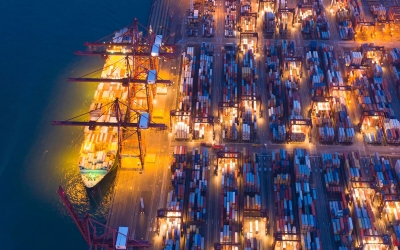
In ENAE Business School's Official Master in Logistics and Operations Management program, you will learn how to analyse the performance of a company's operation


The Master in International Trade, E-commerce and AI Concentration is designed to prepare professionals to lead international business operations in a global, d
Artículos recomendados
También te podría interesar leer

There is a ceiling most professionals hit somewhere in their thirties. The technical skills that earned them their first promotion stop being enough, and the gap between where they are and where they want to be starts to feel less like a ladder and…
The volume of data any organisation handles today, the speed at which new threats emerge and growing regulatory complexity have outpaced traditional manual approaches. That is precisely where AI-driven risk management stops being a technology…
Supply chains fractured, trade wars escalated, a pandemic rewired sourcing decisions overnight and yet global trade volumes kept climbing. If that sounds contradictory, it is because most conversations about international trade are still using a map…
